Male Pattern Baldness

Hair Loss Studies

February 9, 2011

Many studies done on hair loss show that the general time between initially noticing losing hair and seeking treatment for hair restoration is about six years. This makes perfect sense considering that most hair loss happens gradually over time. An initial stage of sadness and denial is normal, followed by the hope that the hair [...]

Read more >>

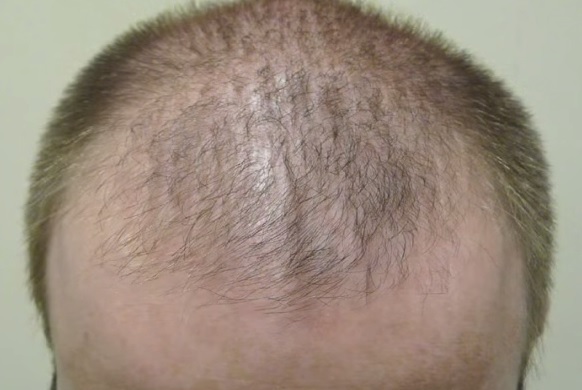
Androgenic alopecia, more commonly referred to as male pattern baldness, is caused by the enzyme 5-alpha-reductase converting testosterone into dihydrotestosterone, or DHT. DHT, dominant in the scalp, attaches to the receptor sites of hair follicles, causing them to atrophy and die. Hence, we have male pattern baldness. However, the determining factor that leads to one’s [...]

Read more >>

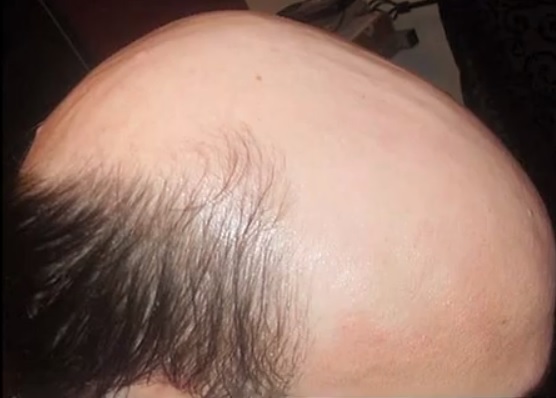
Hair loss can occur for various reasons. Stress, diet, health, sleep, drug use, etc. But male pattern baldness, scientifically termed androgenic alopecia, is the most common cause of hair loss. Male pattern baldness technically starts in the womb. Your predetermined genetics will manifest in male pattern baldness 20 to 40 years later depending on whether [...]

Read more >>

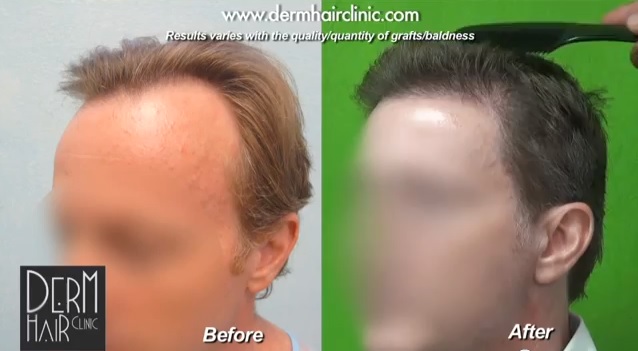
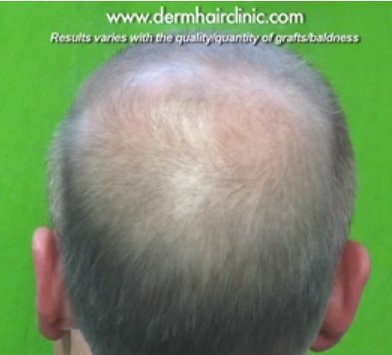
This patient’s hair loss became catastrophic after a failed transplant procedure at another clinic that used the outdated “strip harvesting” technique. He was left with a huge scar, pluggy implants and an unnaturally straight hairline. He came to us hoping to have his strip scar hidden, his empty crown filled and his hairline made to [...]

Read more >>

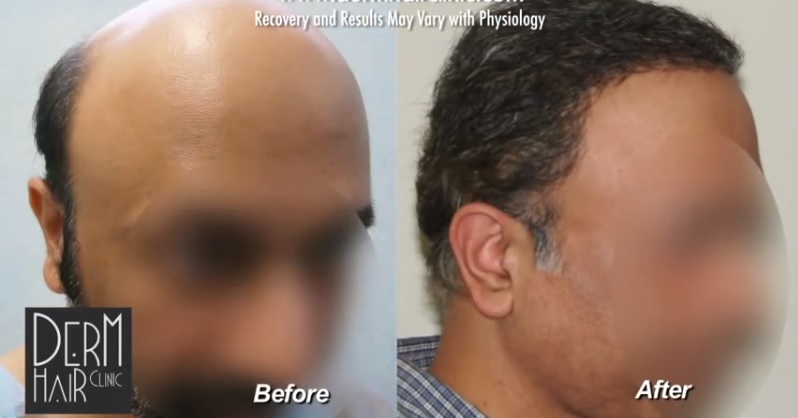
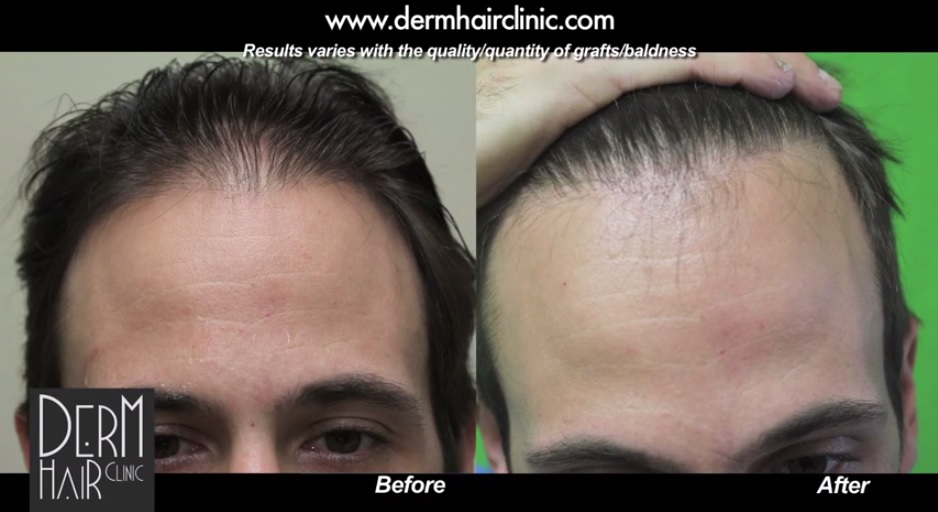
The patient presented in this photo has a history of prior Follicular Unit Extraction (FUE) and Body Hair Transplantation (BHT) hair restoration procedures performed upon him at another facility. These previous surgeries of his focused mainly on restoring his hairline, frontal scalp and crown. However, the patient was not happy with the esthetic results of [...]

Read more >>

The characteristics of female pattern baldness hair loss differ from typical male pattern hair loss due to the pattern in which hair is lost. The most recognized hair loss pattern is the common type seen in men, where the hair loss occurs on the temples and crown. Female pattern hair loss however diffuses across the top of the [...]

Read more >>

Leg hair Restoration This picture presents a special case of the first documented success case of using body hair to restore the hair of the legs. The patient had the hair on his shins lost due to friction. He went through a failed attempt of restoring his leg hairs with thigh hairs at another hair [...]

Read more >>

The reason for hair loss resides in the genetic predisposition of the hair follicle itself, rather than that of the scalp. Therefore, transplanted hairs will continue growing because the hair follicle keeps its original genetic coding, and thus these are the follicles that are not affected by Dihydrotestosterone (DHT), which is the hormone that causes [...]

Read more >>

Follicular unit extraction (FUE) is a hair transplant method that involves donor harvesting where the doctor uses a small punch, .8mm to 1 mm in width, to individually extract each follicular unit from the donor area and transplant them to balding areas of the head. FUE was developed as a response to avoid scarring in [...]

Read more >>

  Hair Loss Early Age The occurrence and beginning of hair loss for men usually occurs at an older age. However, it happens in younger men, too, even for those who are under 21 years old. Because hair loss is generally unexpected before age 21, it can be shocking for someone that young to discover [...]

Read more >>

Almost everyone suffering from inherited pattern baldness can be successfully treated with hair transplantation. Results of hair transplantation are usually most dramatic when the procedure is performed on individuals with advanced degrees of hair loss. Hair transplantation differs from skin grafting in that grafts contain almost all of the epidermis and dermis surrounding the hair [...]

Read more >>

Why Hair Transplants Work

March 10, 2010

Men can be assured — hair transplants work. However, the success of the procedure depends on the overall density of his hair. The hair that is transplanted is usually removed from an area where the patient has more hair (the donor site) to the place where the patient has less hair (the recipient site). It [...]

Read more >>

The Genetics of Hair Loss

March 10, 2010

There are many theories regarding the genetics of hair loss. Male pattern baldness and other types of hair loss are inherited from family members and is passed down through the generations, but how the genes get passed out and distributed varies greatly. You might have heard the popular myth that hair loss is passed down [...]

Read more >>

A study on hair loss has shown that the average time between first noticing hair loss and seeking hair loss treatment is six years. This is understandable since hair loss is normally a gradual process. There is always the denial stage, then the stage where patients hope their hair loss will stop or, better yet, [...]

Read more >>

According to the American Society of Plastic Surgery hair restoration is currently one of the leading cosmetic surgical procedures for men. The popularity of hair restoration has grown significantly with many celebrities opting for the procedure as the grafts became smaller, resulting in a perfectly natural look. Men who are trying to counter the effects [...]

Read more >>