Surgical Treatments

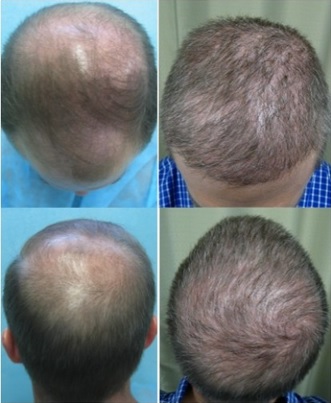
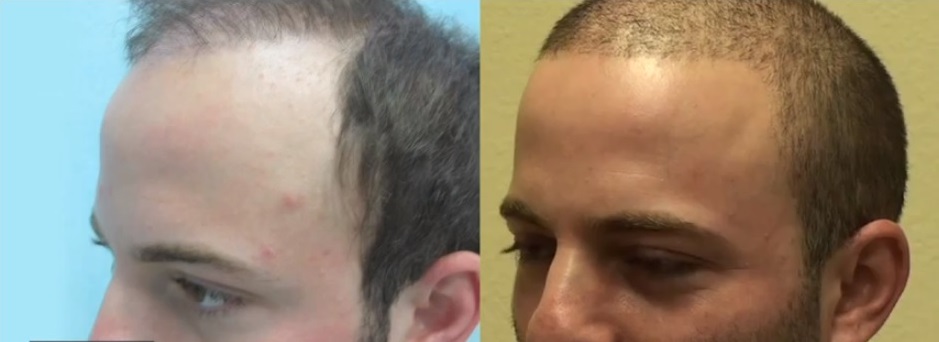
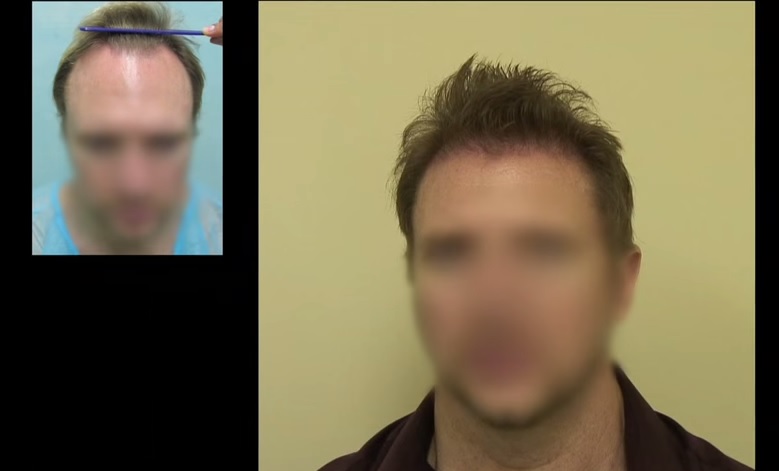
This patient wanted his hairline, temples, front scalp and crown restored, but in a way that retained as much donor hair as possible as a hedge against potential future hair loss. He came to Dr. Umar specifically in search of a Follicular Unit Extraction using body hair, which is the perfect approach for this type [...]

Read more >>

Getting a hair transplant is a big deal for men, and an investment as well. Sadly, just like a stock investment, not many hair restoration patients take the time to really research or look into the actual procedure they will undertake themselves.  Looking for a good price, they do not realize what they really are in for. Scarring [...]

Read more >>

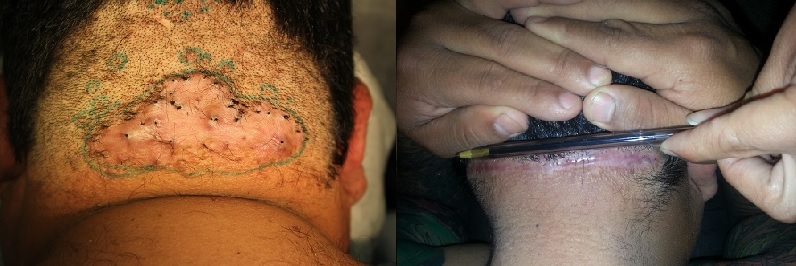
Traditional Strip Surgery hair transplants have a history of leaving a lot of scarring. With new modern hair restorationtechniques, visible scarring can be fully eliminated using Follicular Unit Extraction. Hair transplantation procedures that use follicular unit extraction fully are known to leave no linear scarring. Older techniques like the strip type HT also called FUT, FUHT usually leaves a [...]

Read more >>

The characteristics of female pattern baldness hair loss differ from typical male pattern hair loss due to the pattern in which hair is lost. The most recognized hair loss pattern is the common type seen in men, where the hair loss occurs on the temples and crown. Female pattern hair loss however diffuses across the top of the [...]

Read more >>

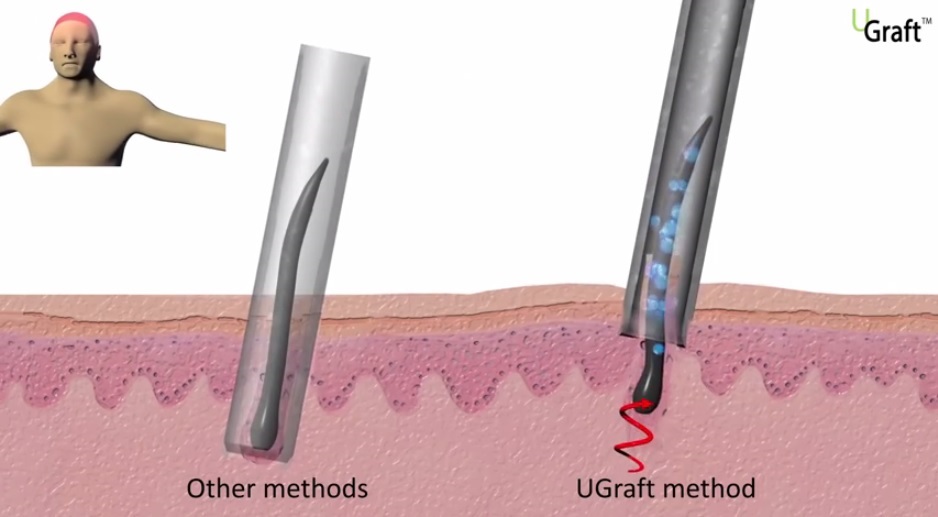
Dr. Umar performs hair transplantation using very tiny devices to prepare the recipient areas with slits or holes into which the donor hair units are implanted. These tiny holes are created in the most minimally traumatic manner that makes the healing course rapid after the hair transplant. Because of the microsurgical technique used by Dr. [...]

Read more >>

Follicular unit extraction (FUE) is a hair transplant method that involves donor harvesting where the doctor uses a small punch, .8mm to 1 mm in width, to individually extract each follicular unit from the donor area and transplant them to balding areas of the head. FUE was developed as a response to avoid scarring in [...]

Read more >>

Harvesting hair from the head donor area and harvesting from the beard have differences that should be taken into account, such as the level of scarring, the ease of extraction of the hairs, and the hair quality. Beard hair FUE is a scalpel free procedure and does not leave a linear scar, but it will [...]

Read more >>

An estimated 50 million men (and 25 million women) suffer from hair loss in the United States. Unfortunately for men, high testosterone is one of the main reasons for hair loss, and therefore that is why women don’t have hair loss problems nearly as often as men. Furthermore, some women who have too much testosterone [...]

Read more >>

Whether or not a hair transplant hurt mostly depends on an individual’s tolerance for pain. Some people handle pain better than others so there are no absolute rules to determine if a hair transplant will be painful. Some say that hair transplant surgery is similar to a visit to the dentist. This does not seem [...]

Read more >>

Follicular Unit Extraction (FUE) is a method of obtaining donor hair for hair transplantation and individual follicular units are harvested directly from the donor area, without the need for a linear incision. It is a new method of harvesting donor grafts that is less invasive than previous techniques. Small round punches are used to extract [...]

Read more >>

Causes of Female Alopecia

March 10, 2010

Androgenetic alopecia, also known as female pattern baldness, is the most common type of hair loss in women. The hair thins at the top and front of the head. It affects approximately one-third of all susceptible women, but is most commonly seen after menopause. In female pattern hair loss some excess loss of hair is [...]

Read more >>

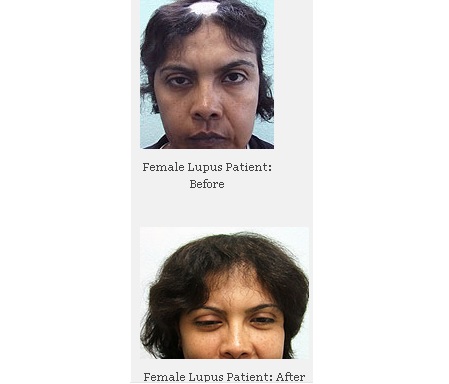
Besides male patterned baldness, there are dermatological conditions that can cause hair loss. Many of these conditions are inflammatory in nature. Some conditions, if not recognized and treated early, could result in scarring with permanent hair loss. One such condition is known as lupus erythematosus . Hair loss with scarring (cicatricial alopecia) is often the [...]

Read more >>