Medical Treatments

Hair Loss Studies

February 9, 2011

Many studies done on hair loss show that the general time between initially noticing losing hair and seeking treatment for hair restoration is about six years. This makes perfect sense considering that most hair loss happens gradually over time. An initial stage of sadness and denial is normal, followed by the hope that the hair [...]

Read more >>

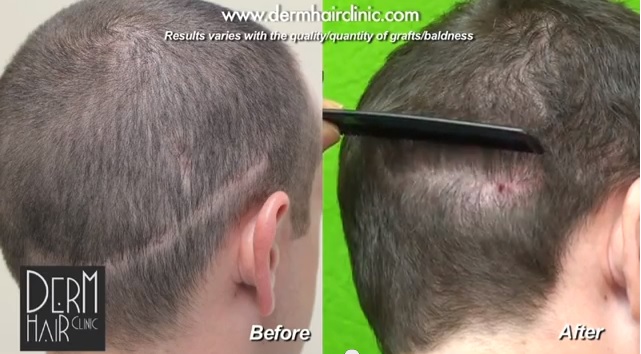
This video shares the story of a patient who underwent a hair transplant using the traditional strip surgery approach. The clinic which performed it used 1,800 grafts. Unfortunately, that clinic’s strip method did not help his hair loss. He is unhappy with how hairline turned out, the baldness that remained on his head and the [...]

Read more >>

When men begin to suffer from hair loss, one product they use is Propecia. Propecia is a finasteride that is used for the treatment of male pattern hair loss, also known as androgenic alopecia. Male pattern hair loss or baldness is a common condition for men whose hair start to thin on their scalp. Oftentimes, [...]

Read more >>

There are many studies and research regarding the genetics of hair loss. One theory speaks of the inheritance of the hair loss gene from members of the family and how it is possibly passed down through following generations. But how thehair loss gene get passed out and distributed among people varies immensely. Many studies report that hair [...]

Read more >>

On the average, people shed about 100-150 hairs per day. Unfortunately, about one-third of women suffer from androgenetic alopecia, also known as female pattern alopecia or baldness. Female pattern hair loss is seen predominantly over the top and front of the head. In female pattern hair loss, after the hair has shed, the root that grows [...]

Read more >>

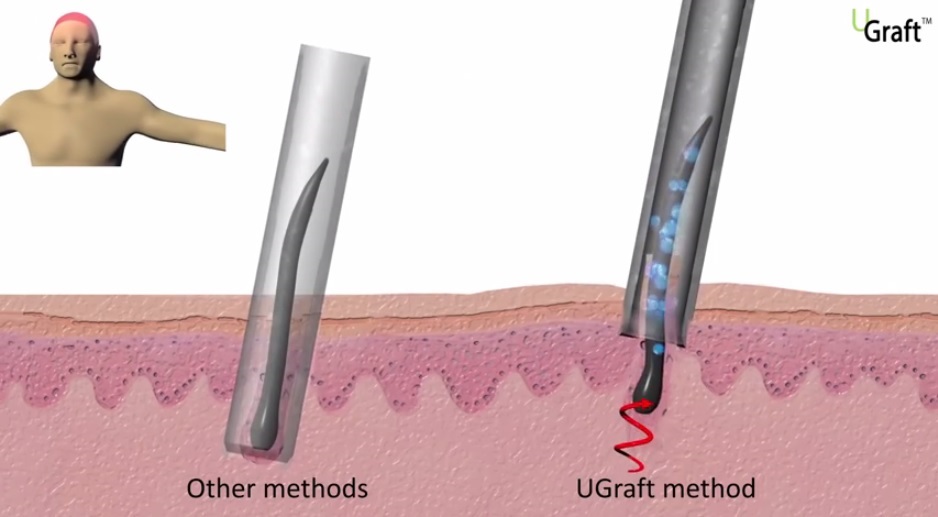
Dr. Umar performs hair transplantation using very tiny devices to prepare the recipient areas with slits or holes into which the donor hair units are implanted. These tiny holes are created in the most minimally traumatic manner that makes the healing course rapid after the hair transplant. Because of the microsurgical technique used by Dr. [...]

Read more >>

Follicular unit extraction (FUE) is a hair transplant method that involves donor harvesting where the doctor uses a small punch, .8mm to 1 mm in width, to individually extract each follicular unit from the donor area and transplant them to balding areas of the head. FUE was developed as a response to avoid scarring in [...]

Read more >>

Hair loss for children is a more common than you think. An estimated 3 percent of all pediatric office visits in the United States involve a parent’s concern over a child’s hair loss, and nearly 2 million children suffer from some form hair loss. Children can be affected by different forms of Alopecia (link to [...]

Read more >>

Androgenetic Alopecia is commonly referred to as genetic balding, and it is the main cause of male and female hair loss. Therefore your fate with regards to balding has been predetermined before you were even born, and the follicles have been genetically programmed to know when, where, and how much baldness you will experience in [...]

Read more >>

Cicatricial alopecia, also known as scarring alopecia, is a form of hair loss in women and men that is marked by the scarring of the scalp where the hair follicle is destroyed and replaced with a scar tissue causing permanent hair loss. Unlike other forms of hair loss, cicatricial alopecia results in scattered bald patches [...]

Read more >>

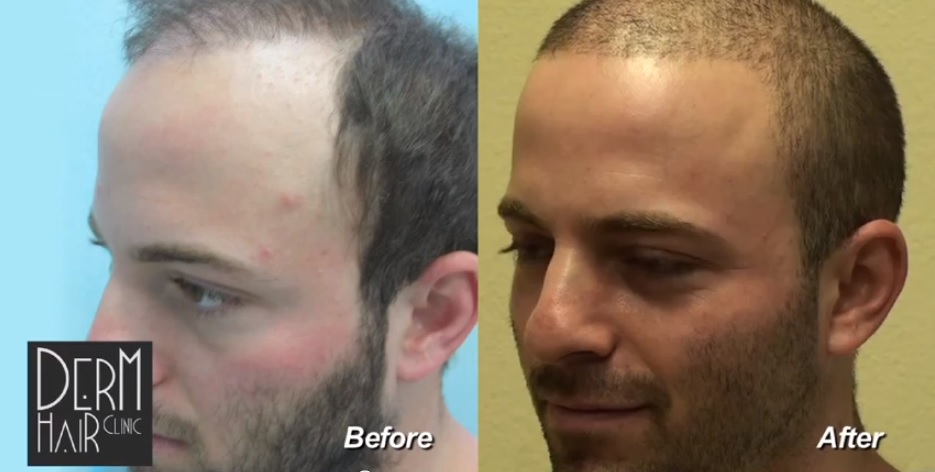
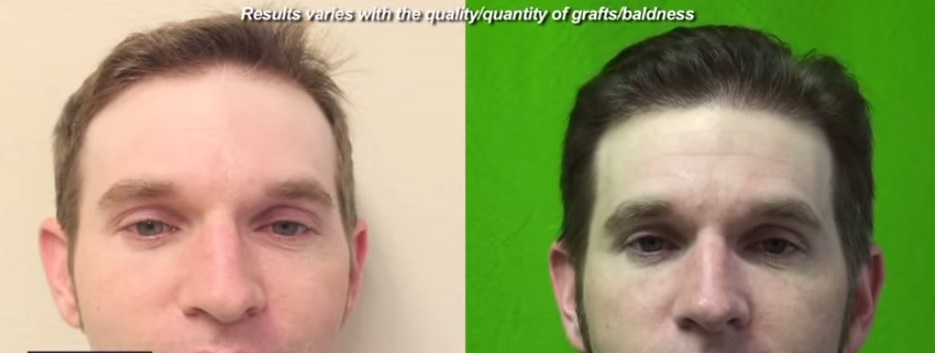
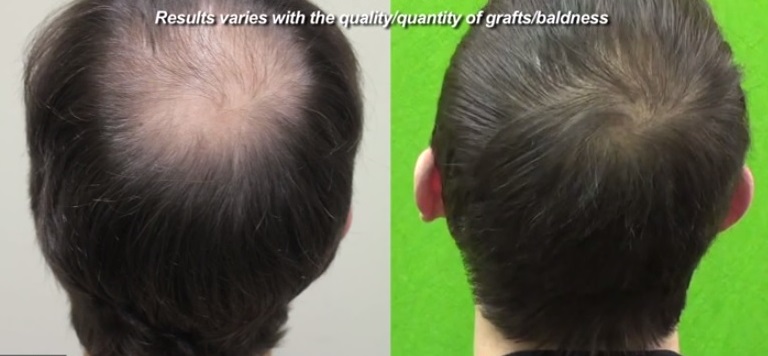
Almost everyone suffering from inherited pattern baldness can be successfully treated with hair transplantation. Results of hair transplantation are usually most dramatic when the procedure is performed on individuals with advanced degrees of hair loss. Hair transplantation differs from skin grafting in that grafts contain almost all of the epidermis and dermis surrounding the hair [...]

Read more >>

Whether or not a hair transplant hurt mostly depends on an individual’s tolerance for pain. Some people handle pain better than others so there are no absolute rules to determine if a hair transplant will be painful. Some say that hair transplant surgery is similar to a visit to the dentist. This does not seem [...]

Read more >>

Besides male patterned baldness, there are dermatological conditions that can cause hair loss. Many of these conditions are inflammatory in nature. Some conditions, if not recognized and treated early, could result in scarring with permanent hair loss. One such condition is known as lupus erythematosus . Hair loss with scarring (cicatricial alopecia) is often the [...]

Read more >>

Telogen Effluvium is a form of non-scarring alopecia characterized by diffuse hair shedding, often with an acute onset. It is characterized by massive hair loss as a result of early entry of hairs into the telogen phase. A chronic form with a more insidious onset and a longer duration also exists. Telogen effluvium is a [...]

Read more >>

According to the American Society of Plastic Surgery hair restoration is currently one of the leading cosmetic surgical procedures for men. The popularity of hair restoration has grown significantly with many celebrities opting for the procedure as the grafts became smaller, resulting in a perfectly natural look. Men who are trying to counter the effects [...]

Read more >>